

Blog
Educate & Motivate
Discover more about managed services, cyber security, cloud solutions and much more.

The blog section of our website contains a wide array of interesting and useful posts, covering the full spectrum of business IT topics. We will share important advice on how to protect your business from common threats, offer tips on how to plan for disasters, and explain the true value of some of the services we provide - all with a view to helping you to become more informed and better equipped to tackle modern business challenges.
If you have a more specific query don’t hesitate to get in touch.
Fifosys Blog and Resources

Don’t Be Fooled: 5 Phishing Tactics to Watch Out for (And How to Spot Them)
April Fools’ Day is built on harmless deception, but phishing attacks are anything but. While prank emails might raise a smile, malicious ones are designed to catch you off guard and exploit trust, urgency or familiarity.
In this blog, we break down five common phishing tactics still catching people out in 2026, and what to look for before you click.
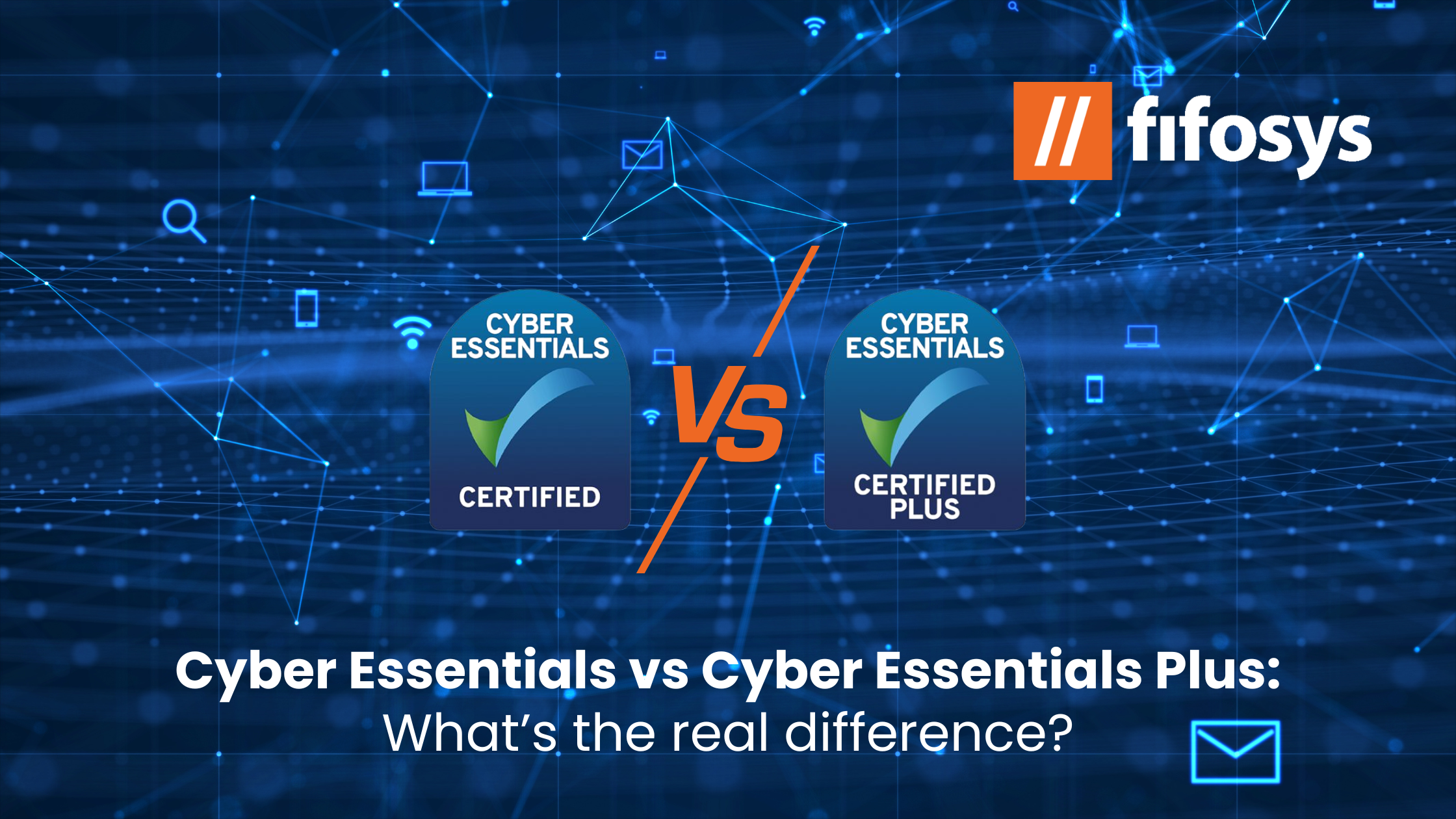
Cyber Essentials vs Cyber Essentials Plus: What’s the Real Difference?
Cyber Essentials has become a baseline requirement for many UK organisations, whether for supply chains or government contracts. But as more businesses look beyond the badge, a key question keeps coming up: is Cyber Essentials enough, or does Cyber Essentials Plus offer something more meaningful?
In this blog, we break down the real difference between self-assessment and independent validation, and why that distinction matters when it comes to understanding your actual security posture.

Eight Years After Cambridge Analytica: Would It Even Matter Today?
Eight years on from the Cambridge Analytica scandal, the questions it raised about data, privacy and control feel less shocking, and more familiar.
At the time, the idea that millions of users’ data could be harvested and used without clear consent felt like a turning point. Today, we operate in a world where data collection underpins much of the technology we use every day.
In this blog, we look back at what actually changed, and why the bigger lesson for organisations in 2026 is not the scandal itself, but how data now moves through modern systems.

What the Companies House Incident Reveals About Cyber Risk
Companies House is one of those systems most people assume simply works. It sits quietly in the background of the UK business environment, holding records for millions of companies and underpinning how organisations verify each other every day.
But recent reports of a vulnerability in the WebFiling system have raised serious questions about how secure that infrastructure really is. Beyond the technical issue itself, the incident highlights something broader: many of the systems businesses rely on sit outside their direct control.
When platforms like this experience problems, the consequences can ripple far beyond the organisation running them.
Your Data, Their Model: What Businesses Need to Understand About AI and Data in 2026
AI is everywhere. In almost every business tool, from productivity software to analytics platforms. But as organisations experiment with these systems, a key question is often overlooked: what happens to your data once it enters an AI model? In this piece, we explore how large language models work, where business data can unintentionally flow, and why governance around AI is becoming increasingly important in 2026.

Locking the Door: Why Basic Cyber Hygiene Still Matters in 2026
The UK government has launched a campaign urging businesses to “lock the door” on cyber criminals, highlighting a simple truth: many attacks succeed because basic protections are missing. From weak passwords to unpatched systems, small gaps can create big risks. Here’s why cyber hygiene still matters in 2026 and why the fundamentals remain your strongest defence.

When Technology Stops the Game: Why Invisible Infrastructure Matters
A six-minute delay in the North London derby was a small disruption with very visible consequences. Tens of thousands waited. Millions watched. All because the technology, which is usually invisible, briefly stopped working. In this piece, we explore what that moment reveals about modern infrastructure and why reliability now underpins experiences far beyond the stadium.

What Is DMARC? Why Domain Protection Matters in 2026
Email remains one of the most trusted channels in business, yet it is also one of the easiest to abuse. If your domain is not properly protected, it can be spoofed without your knowledge, putting your brand and clients at risk. In this piece, we break down what DMARC actually does, why so many organisations still misconfigure it, and why domain protection should be treated as a baseline control in 2026.

Hybrid Work in 2026: Are Your Systems Still Built for 2021?
Hybrid work is no ‘temporary fix’. It’s the operating model for many UK businesses. But while ways of working have matured, much of the infrastructure behind them sometimes hasn’t. From legacy VPN dependence to collaboration sprawl and uneven identity controls, systems built in urgency are now showing their age. This piece explores whether your architecture is truly ready for sustained hybrid operations in 2026.

What the ChatGPT Caricature Craze Really Reveals About Privacy and AI Risk
ChatGPT caricatures are everywhere right now. They’re fun, personalised, and feel low risk. But beneath the surface sits a more uncomfortable reality about data permanence, profiling and workplace exposure. This blog breaks down what’s actually at stake when we feed AI more detail than we realise.
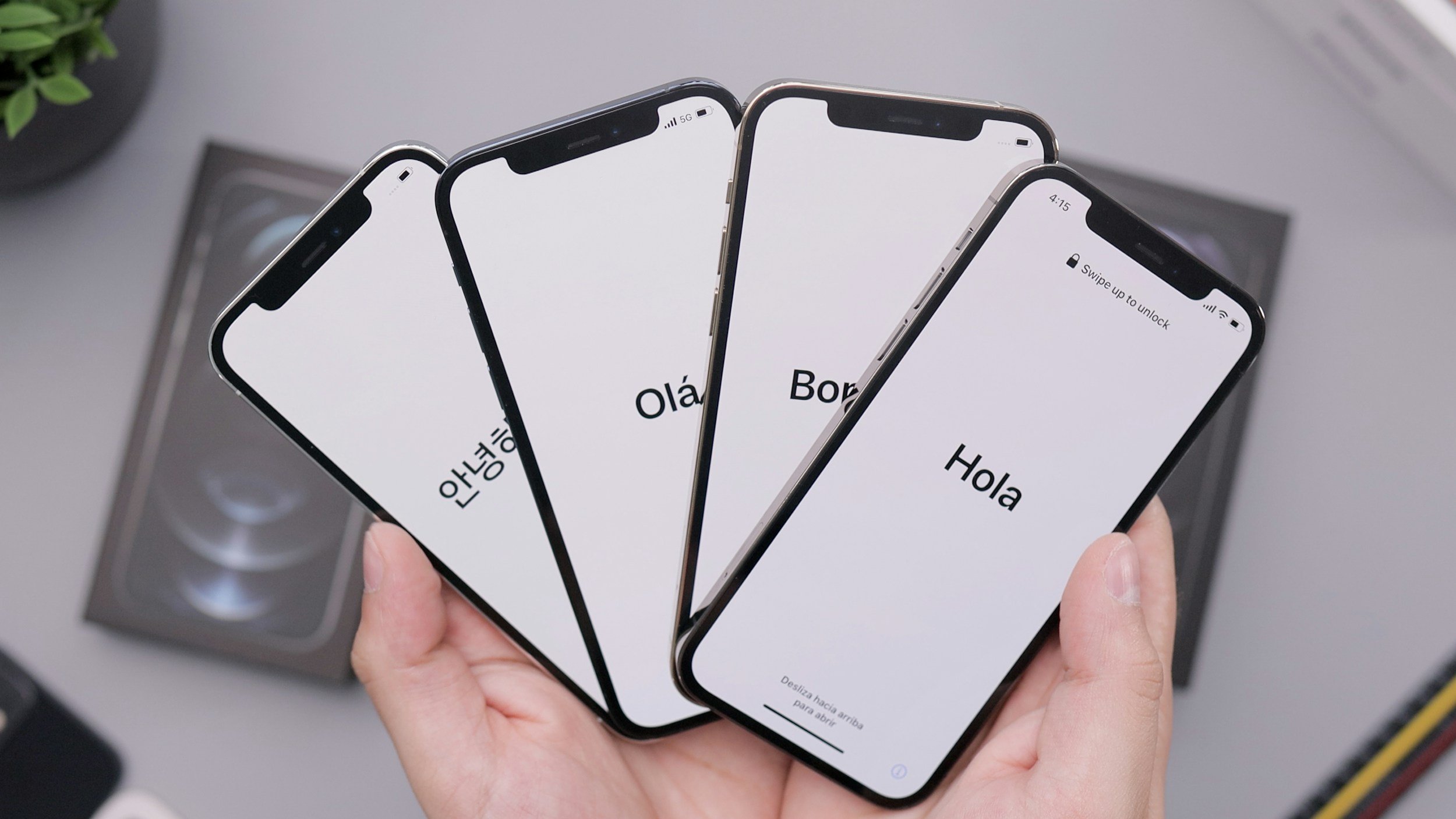
iOS 26.3 - Apple’s Zero-Day Patch - Is the Latest Reminder That Patching and Updates Still Matter
Apple’s latest zero-day patch, delivered in iOS 26.3, is here to fix a vulnerability that was already being exploited. For individuals, it’s a reminder not to ignore update prompts. For organisations, it’s a reminder that unpatched devices are potential entry points into wider systems. In this piece, we break down what happened, why timely updates still matter, and what disciplined patch management looks like in practice.

AI Readiness in 2026: How Organisations Can Prepare for What Comes Next
AI adoption is accelerating, but readiness is lagging behind. As organisations head into 2026, the real challenge is no longer access to AI tools, but whether the foundations around data, infrastructure, security and governance are in place to use them effectively. This piece explores what AI readiness really looks like, and how businesses can prepare for responsible, long-term adoption.
Cloud, Infrastructure and Digital Transformation in 2026: What Organisations Are Preparing for Now
Cloud adoption is no longer a question of if, but how well it is governed, scaled and sustained. As we move into 2026, organisations are shifting from experimentation to maturity, rethinking cloud strategy, infrastructure investment and digital transformation as core operating decisions. This piece explores what has changed, what is solidifying, and what businesses should be preparing for next.

Apple Turns to Google’s Gemini AI for Siri: What It Signals About AI Strategy, Risk, and Control
Apple has confirmed a multi-year partnership with Google to power the next generation of Siri and Apple Intelligence using Gemini AI. The move highlights how even the largest technology companies are rethinking AI ownership, dependency, and governance as the market matures.

Fifosys Becomes a CyberSmart Advanced Partner: What That Means for Our Customers
Cyber Essentials and Cyber Essentials Plus remain a critical foundation for managing cyber risk and meeting UK compliance requirements. Fifosys has been promoted to CyberSmart Advanced Partner status, reflecting the scale and quality of how we already support customers through certification and beyond.

Instagram Security Incident: Password Reset Emails, Data Exposure, and What It Means for Cyber Risk
Millions of Instagram users received unsolicited password reset emails over the weekend. We examine what happened, the data exposure risks, and the security lessons for organisations.

2025 in Review: The Cyber Incidents That Redefined Risk and Resilience
2025 was a defining year for cyber security. From major outages to supply-chain attacks, organisations were forced to confront systemic risk and the limits of assumed resilience. This review examines the cyber incidents that mattered and the lessons they hold for the year ahead.

The Rainbow Six Siege Breach and the Hidden Cost of Holiday Cyber Risk
The Christmas period is meant to be quiet, yet the Rainbow Six Siege breach shows how cyber incidents thrive when attention drops. As servers were taken offline and data integrity collapsed, the real story goes beyond gaming disruption, revealing the risks that always-on services face when attackers strike during holiday downtime.
What the November 2025 Cloudflare Outage Teaches Organisations About Resilience
Cloudflare suffered a major global outage on 18 November 2025 that disrupted websites, applications and core services for several hours. A routine internal configuration change triggered an unexpected file duplication that caused Cloudflare’s traffic proxy processes to crash and interrupt global connectivity. The incident revealed how dependent organisations are on single infrastructure providers and highlighted the need for stronger resilience planning, careful change control and clear visibility over internal configuration pipelines.

Every Minute Counts: The Case for Proactive Monitoring
Cyberattacks are rising fast, with one hacking incident now happening every minute. Across the Fifosys client base, we’re seeing record volumes of suspicious logins, phishing emails, and attempted breaches.
In a reactive setup, remediation can take hours long enough for attackers to forward data, alter rules, or move laterally through systems.
This blog explores how proactive monitoring powered by Barracuda Managed XDR is closing that gap, reducing response times from hours to minutes, and giving organisations constant visibility across their cloud environments.